
An Injection-Molded Dialysis Wall Station That Outperforms Rotomolded Competitors
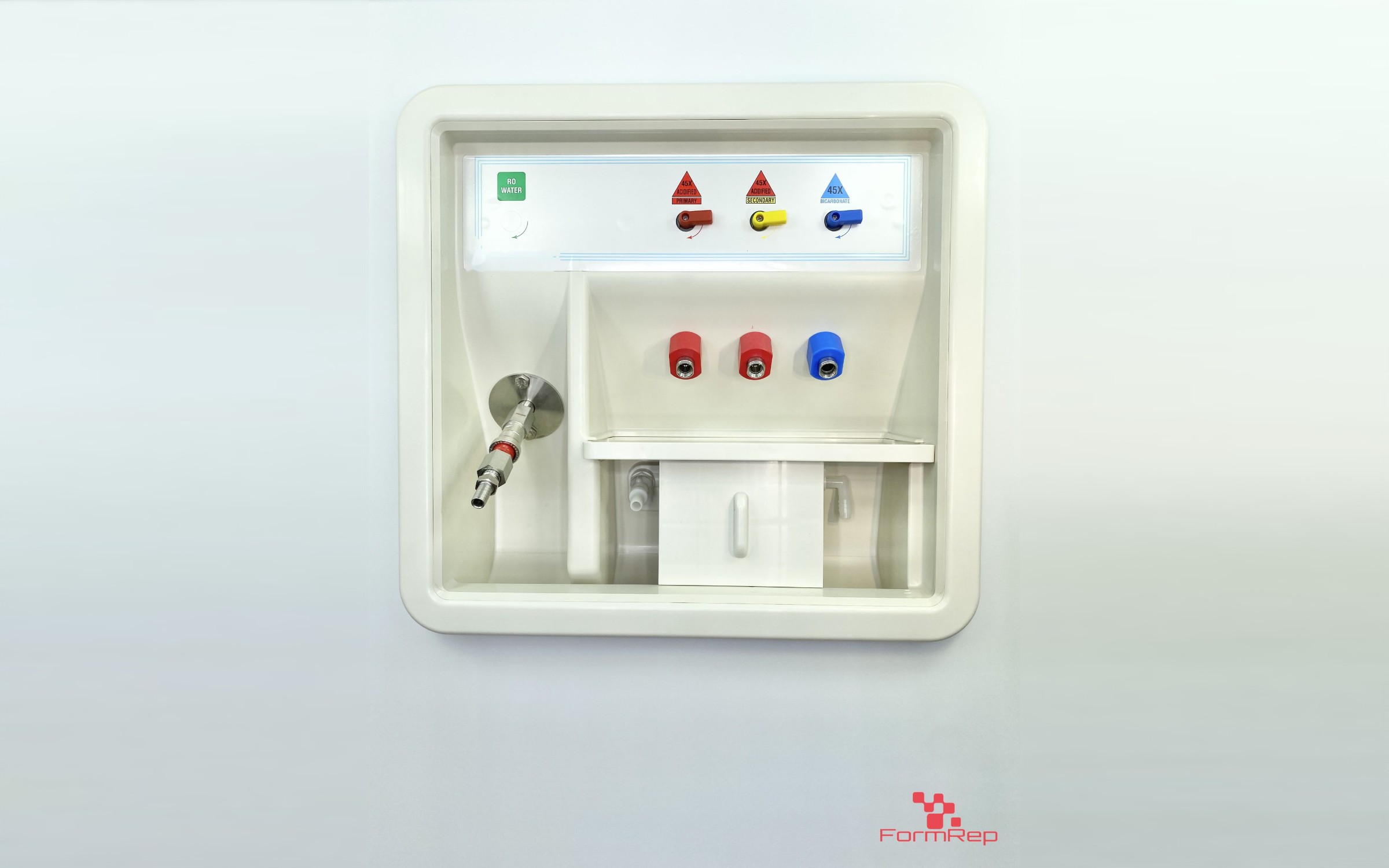
Competing dialysis wall station boxes are made by rotational molding, a slow process, and share the same weak points: a swing-out door that breaks, exposed screw heads that are hard to sanitize and an open drain port with no strainer. FormRep designed a better box for a dialysis water system supplier, built from injection-molded ABS parts with a removable shelf, divider and door, hidden mounting screws and a large strained drain. It is faster to produce, easier to keep clean, and has generated additional sales for the customer.
- Customer: Dialysis water system supplier
- Part: Wall-mounted station box for dialysis water and concentrate connections
- Competing designs: Rotationally molded boxes with a swing-out door, exposed mounting screws and an open drain
- Material: ABS with antimicrobial and UV-stabilizing additives
- Results: Faster production, simpler cleaning, easier assembly and additional sales
The challenge
Wall station boxes sit in dialysis clinics where every surface has to be cleaned and disinfected. Competing boxes are rotationally molded, a slow process with long cycle times. Their swing-out doors stick out from the wall and break in use, the mounting screw heads are exposed inside the box where they trap residue, and the drain port is open with no strainer to catch debris.
The FormRep design
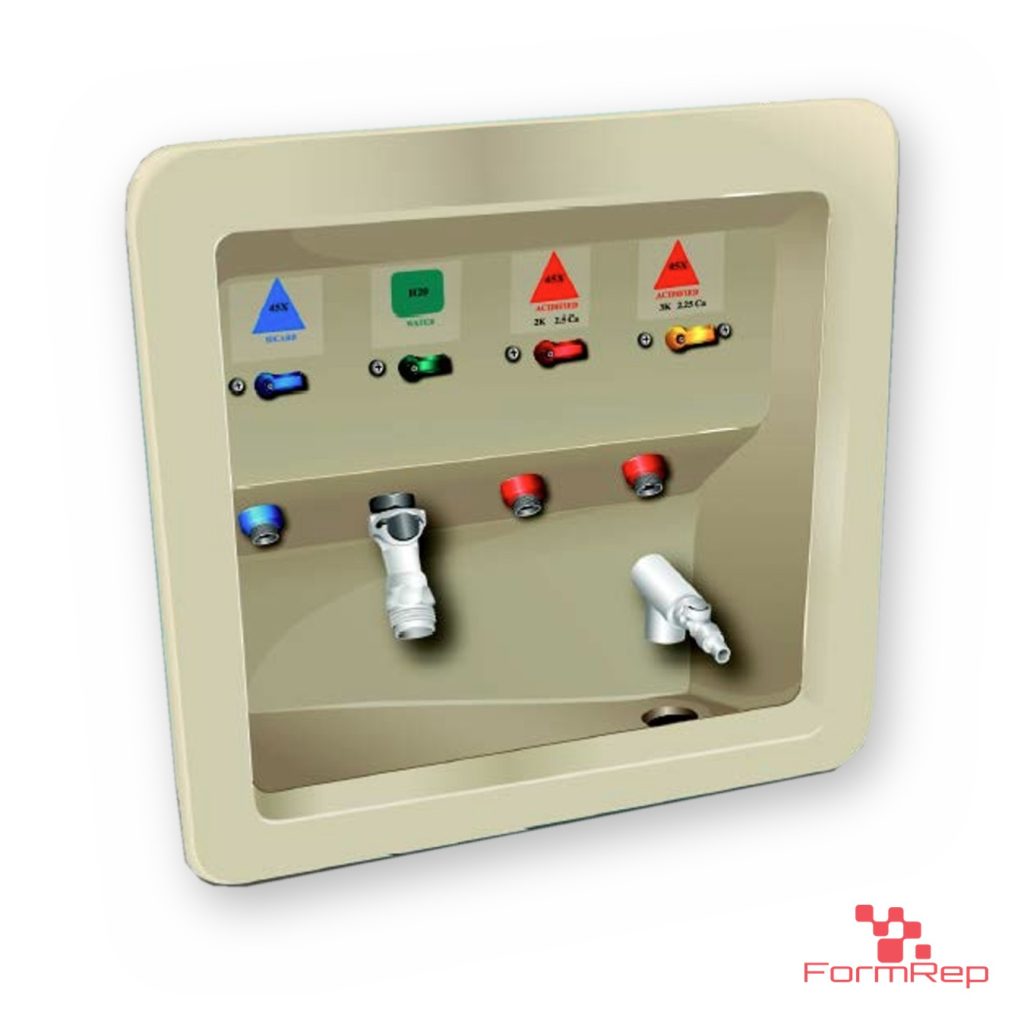
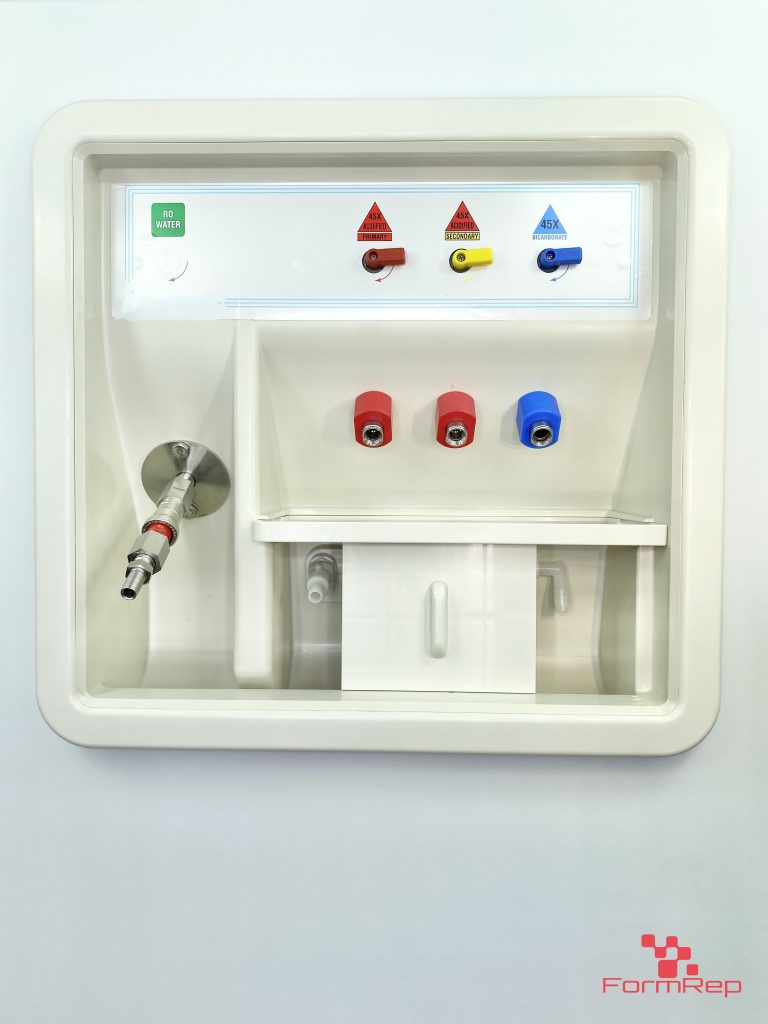
FormRep designed the box around injection molding and around the people who install, use and clean it every day.
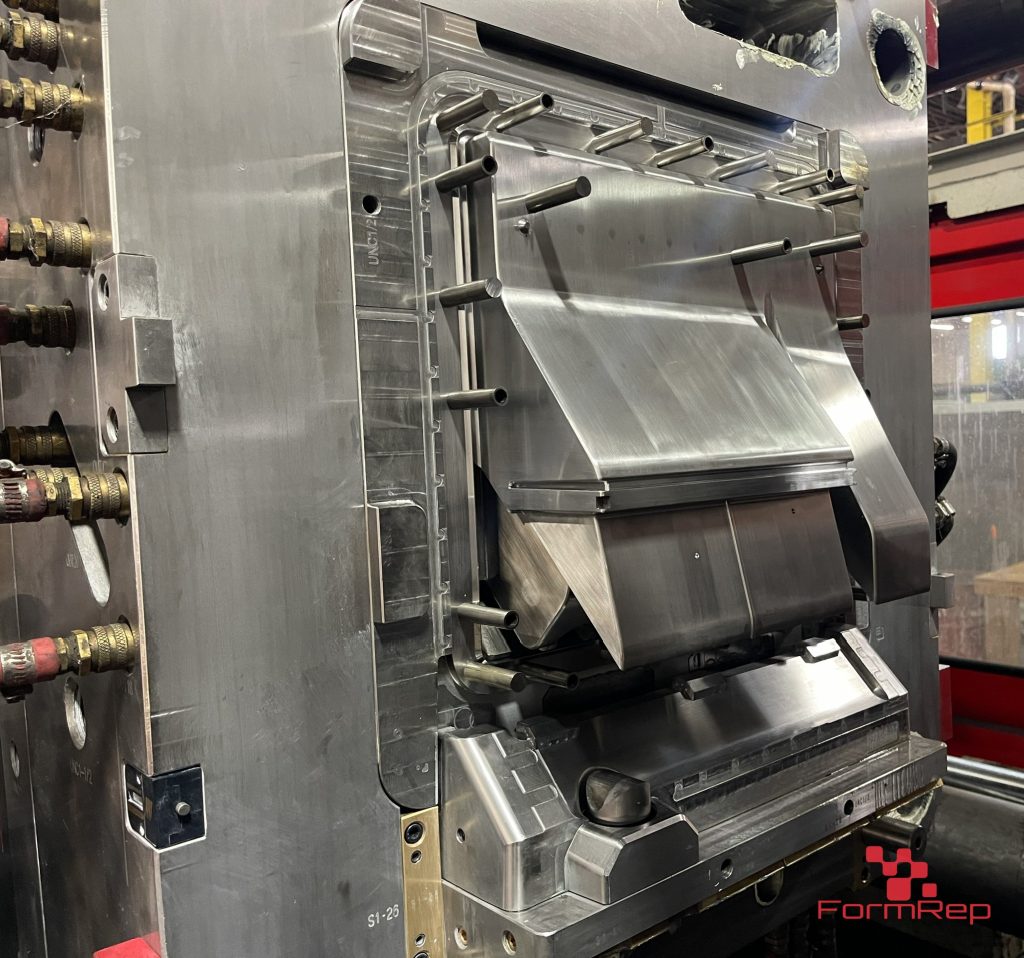
- Injection-molded parts. Molded components are much faster to produce than a rotomolded box, and multi-cavity molds keep tooling costs down.
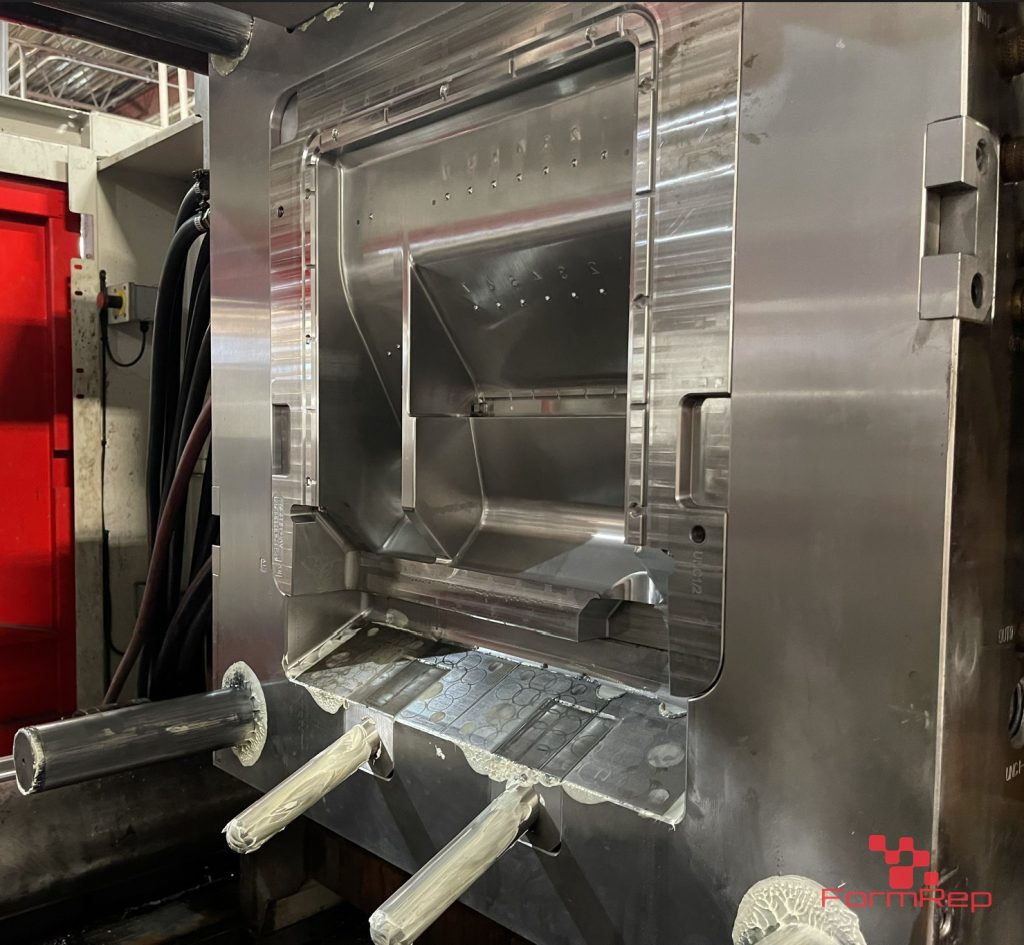
- Removable shelf, divider wall and door. The compartment isolation shelf, divider and sliding door lift out for simple, thorough sanitizing.
- Sliding door that stays flush. The door slides instead of swinging out, so nothing protrudes from the front face to catch or break.
- No exposed screw heads. Hidden mounting leaves a clean, smooth surface that is easier to sanitize and looks better on the wall.
- Large drain with a removable strainer. Debris is caught before it reaches the drain, and the strainer comes out for cleaning.
- Drain block across two compartments. It prevents cross-contamination when operators run pH tests.
- Faster assembly. A valve mount manifold with locator pockets holds the valves in place during assembly, and molded dimples mark the drill locations.
- The right resin. ABS with antimicrobial and UV-resistant additives.
Results
| Competing designs | FormRep design | |
|---|---|---|
| Process | Rotational molding | Injection molding, multi-cavity molds |
| Door | Swing-out, prone to breakage | Sliding, flush with the front |
| Mounting screws | Exposed inside the box | Hidden |
| Drain | Open port, no strainer | Large port with removable strainer |
| Cleaning | Fixed interior | Removable shelf, divider wall and door |
| Assembly | Valves located and holes marked by hand | Valve locator pockets and drill-point dimples |
| Material | Rotomolded plastic | ABS with antimicrobial and UV additives |
Why it matters
A product that is easier to clean, install and live with sells better. Choosing injection molding over rotational molding cut production time and let the design add features a rotomolded box can’t, from flush sliding doors to locator pockets and drill marks. FormRep handles it start to finish: design, printed prototypes, tooling and injection molding, with no minimum run.
See more made-to-fit solutions, or read how a machined cap became one molded part at about 80% lower cost.
Have a rotomolded or fabricated part that could work better molded?
Request a quote →